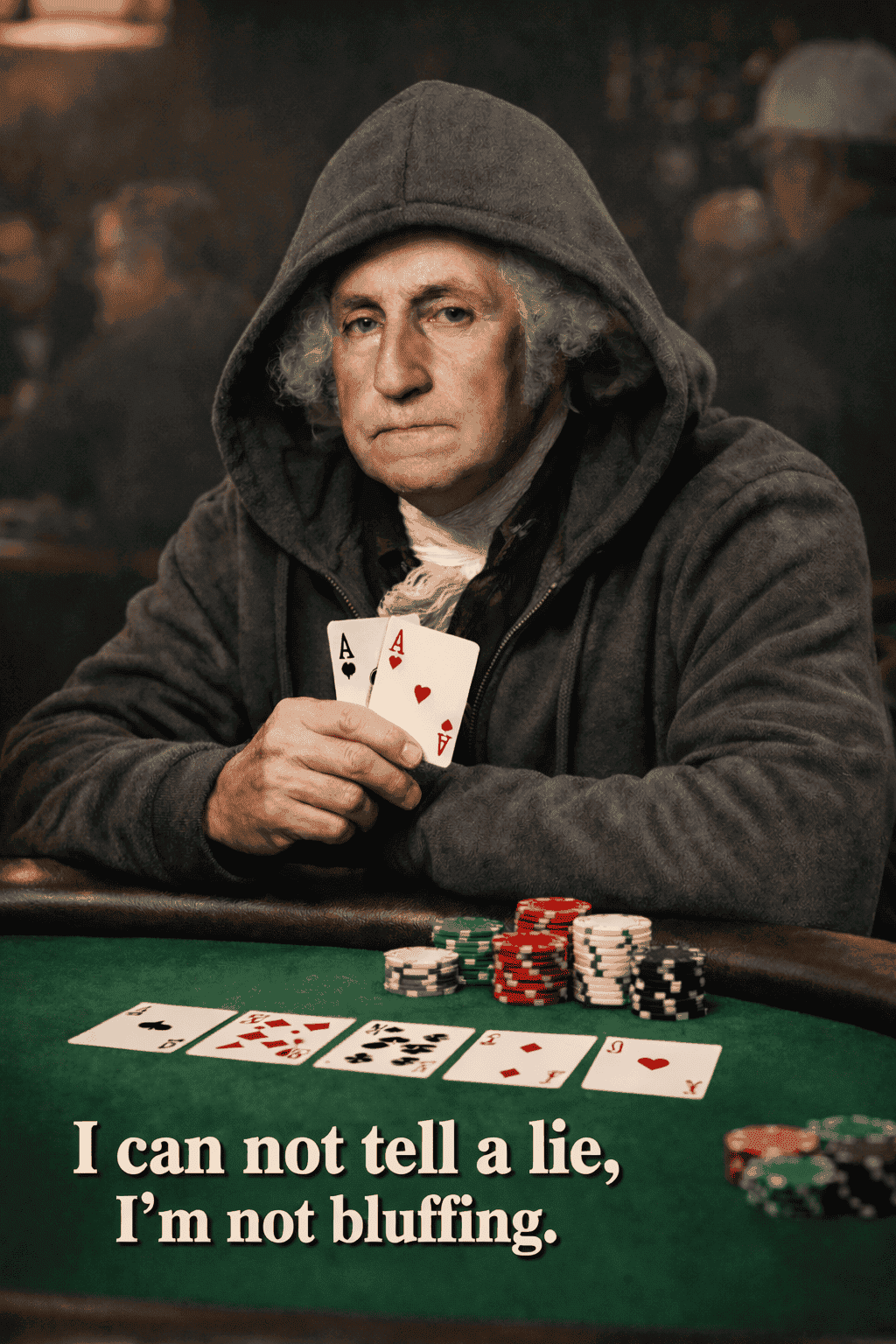
The Low-Stakes Spot Everyone Knows
There’s a familiar scene in low-stakes cash games. A loose-passive player limps preflop, calls a couple streets, and then—out of nowhere—fires a massive river bet. Someone tanks with top pair or an overpair, muttering about “missed draws” and “balanced ranges.”
This is where money quietly disappears.
One of the most expensive leaks in live cash games is ignoring opponent tendencies and defaulting to theoretical curiosity instead of population reality. In low-stakes games, loose-passive players are not constructing polarized bluffing ranges. When they bet big, they’re almost always value-heavy. Treating that bet like it came from a solver is lighting EV on fire.
Understanding the Population Read
Loose-passive players share a few defining traits:
- They call far more than they raise
- They avoid confrontation without strong hands
- They rarely bluff without equity, if at all
- They hate getting raised off “made” hands
What they don’t do consistently is run large, multi-street bluffs—especially on the river. Big bets from these players are emotional and declarative. They’re not saying “I might have it.” They’re saying “I finally have it.”
Population data from live low-stakes games backs this up. River aggression from loose-passive players are dramatically skewed toward value. When, and if, these players bluff, it’s usually:
- Small sizing
- Missed draws turned into weak stabs
- One-and-done attempts
Large river bets? That’s the nuts—or close enough that it might as well be.
Folding Strong Hands Is a Skill
One of the hardest adjustments for many players is learning to fold hands that feel strong. Top pair with a good kicker. Overpairs on dry boards. Even trips or sets on ugly runouts.
Against aggressive, balanced opponents, those hands can deserve calls depending on the situation. Against loose-passive players, they frequently require a disciplined fold.
This is where discipline prints money. Folding strong hands in bad spots doesn’t make a player weak—it makes them accurate. Every disciplined fold against a value-heavy line preserves bankroll and creates future opportunities where value bets actually get paid.
Why Value-Heavy Lines Crush Loose-Passive Players
If loose-passive players don’t bluff big, the adjustment is simple:
- Bet thinner for value
- Size up with strong hands
- Stop hero-calling rivers
Value betting becomes almost mechanical. Second-best hands still call too often. Top-pair weak kicker becomes a calling station. Medium pocket pairs refuse to fold.
At the same time, bluffing frequency should drop dramatically—especially in large pots. Semi-bluffs with equity are fine. Big, stone-cold bluffs into passive calling ranges are suicide.
The Psychological Trap
The real danger isn’t math—it’s ego. Folding to a player perceived as “bad” feels wrong. There’s a temptation to prove something, to “keep them honest,” or to justify the call because the opponent should be capable of bluffing.
But poker isn’t about what opponents should do. It’s about what they actually do.
Loose-passive players don’t bluff big. Treat that as gospel until proven otherwise.
Cash Game Takeaway
Ignoring opponent tendencies leads to unnecessary hero calls and bloated pots with marginal hands. Against loose-passive players, discipline beats curiosity every time. Value betting prints over time while, hero calling light, destroys stacks faster than Godzilla destroys buildings.
The fix isn’t complicated—but it does require checking the ego at the door and folding hands that look pretty on paper but don’t hold up in the end.